 TechAnalyzer Pro
Xcel Energy Inc XEL
Stock research in plain language · As of Nov 29, 2026 · updated once a week, after the trading week closes
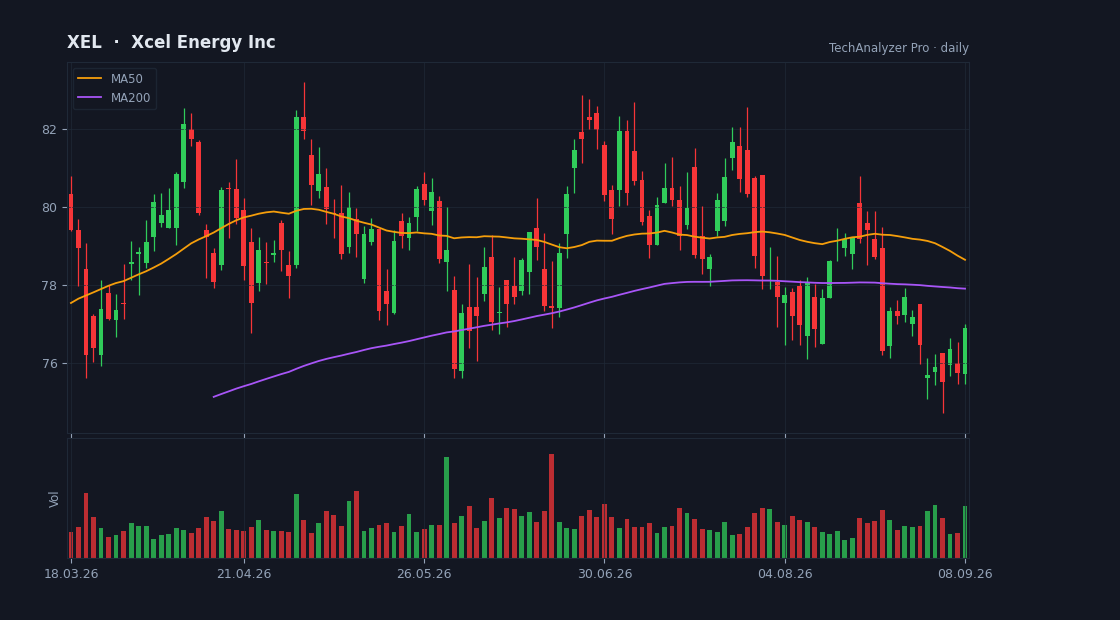
Daily candles, 50 and 200-day averages and volume · updated every trading day · click to open the live chart
The bottom line
Xcel is a regulated utility: revenue and profit are largely set by regulators approving rates and the size of its infrastructure spending. Last quarter revenue was $4.17bn, net income $960m, and EPS came in at $1.52 versus a $1.39 estimate. At the same time free cash flow was negative $1.21bn, debt is $42.7bn and share count grew 6.2%, meaning heavy capex is funded by borrowing and new shares. The stock at $81.47 sits near the top of its 52-week range (92%) at about 19x earnings, in line with peers, so the price embeds continued regulator-approved growth alongside high leverage.
An explanation of the mechanics from the facts on this page, not advice.
What the company does
Xcel Energy Inc is a large-cap company in the Utilities sector (Utilities - Regulated Electric), with a market value of $52.3B, based in the USA.
It employs about 11,534 people and has been listed since Sep 24, 1985.
Xcel Energy Inc., through its subsidiaries, operates as an electric and natural gas delivery company in the United States. It operates through Regulated Electric Utility and Regulated Natural Gas Utility segments. The company generates, purchases, transmits, distributes, and sells electricity through its energy portfolio, including wind, nuclear, hydroelectric, biomass, and solar power from both owned generation facilities and PPAs, as well as its fossil fuel energy portfolio, such as coal and natural gas; sale and resale of wholesale transmission service; and engages in wholesale commodity and trading operations.
Cheap or expensive? priced in line with its group
Its price-to-earnings (P/E) is 19.0 versus 19.3 for the median of the Utilities sector in our universe (9 companies) — priced in line with its group.
Revenue is growing 7% versus the same quarter last year.
On analysts' next-year forecasts the multiple drops to 17.3 — they expect higher earnings.
The average analyst price target is 90.87, 12% above the current price (their view, not ours).
The stock sits at 92% of its one-year range (0% = the low, 100% = the high).
The risks
- • More cash leaves than comes in (negative free cash flow).
- • The share count grew 6% in a year — each share owns a smaller slice of the company.
- • Net debt is 1.6× shareholders' equity — high leverage.
Strengths
- ✅ Profitable — 23 of every 100 dollars of revenue stays as profit.
- ✅ Most analysts rate it buy (18 vs 1).
- ✅ Pays a dividend (2.9% a year).
What the market is talking about this week
Data-center electricity demand is pushing utilities to enlarge their capital investment plans.
- An industry roundup named Xcel Energy among utilities presenting larger multi-year investment plans driven by new data-center electricity demand. [1]
A summary of the articles below only, each point with its source. Not a forecast, not a recommendation.
What to watch
- Whether Xcel publishes an update to its multi-year capital plan, as peers mentioned in the roundup did. [1]
- Free cash flow in the next report: currently negative $1.21bn, which determines how much new debt or equity is needed.
- The pace of share issuance after 6.2% dilution, which shrinks each holder's slice of earnings.
- Regulatory rate decisions and new large customers, the main revenue driver for a regulated utility. [1]
What changed this week
Over the past week the stock rose 2.5% (for comparison: S&P 500 +1.7%, sector ETF XLU +1.7%).
This week's news
- Utility Spending Plans Grow as Large New Power Customers Sign On finance.yahoo.com · 2026-11-23
A sponsored roundup of utilities expanding capital plans after Q3 results: AEP's $100bn five-year plan, CenterPoint's increase to $70.7bn over ten years; Xcel is only listed among the named companies. source ↗
What changed since last week
No material change: same valuation verdict, same risk flags, price moved less than 3%.
A description of facts from the filings and the market — not investment advice or a recommendation. "Cheap" and "expensive" are always relative to the comparison group. Educational information only — not investment advice. Not a registered investment adviser or broker-dealer.